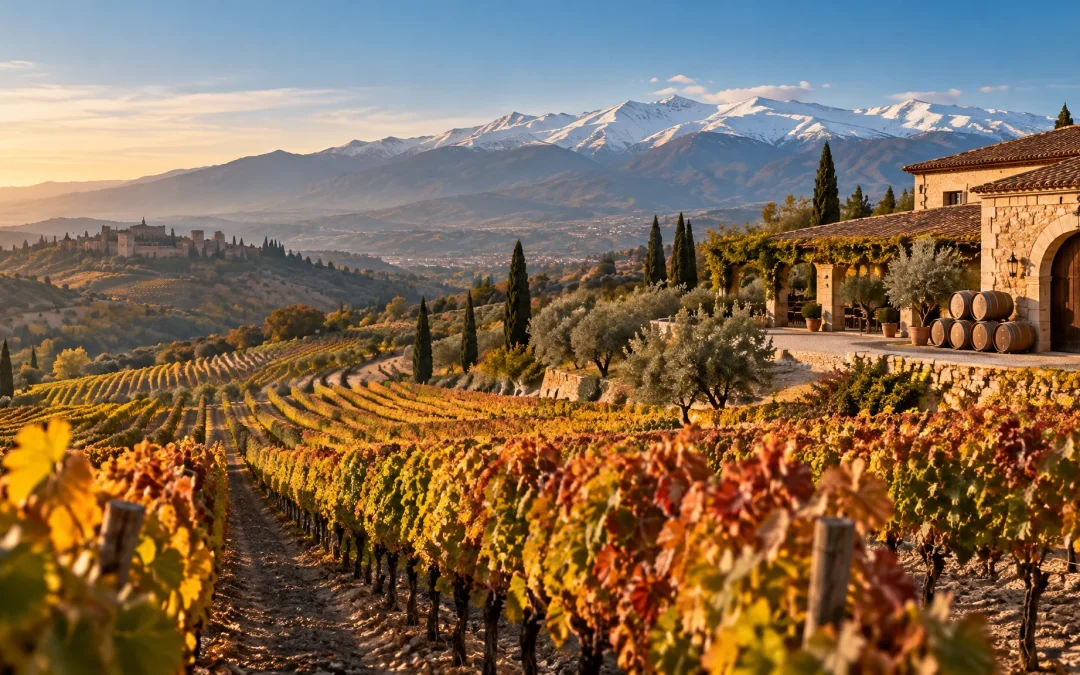
If you are interested in Granada wine country, you will discover a side of the province that many visitors never experience. Beyond the Alhambra, the Albaicín, and the historic center, Granada has vineyards, mountain landscapes, traditional wineries, and local wines that reflect the extraordinary variety of Andalusia.
A visit to a winery can be an excellent addition to a trip through Granada. It offers the opportunity to enjoy the countryside, learn about local traditions, taste regional products, and meet producers who are deeply connected to the land.
Autumn is an especially attractive time to explore the wine region. The intense summer heat begins to soften, the countryside takes on warm golden tones, and the grape harvest brings a special atmosphere to many vineyards. Whether you are a dedicated wine enthusiast or simply enjoy food, scenery, and authentic experiences, Granada’s wine country is worth discovering.
What Makes Granada Wine Country Special?
Granada is a remarkably diverse province. It includes the Sierra Nevada, high mountain villages, fertile agricultural plains, olive groves, historic towns, and the Mediterranean coast.
This variety creates different growing conditions across the province. Vineyards can be found in areas with different elevations, soils, temperatures, and landscapes. Some wineries are located in mountain environments, while others are surrounded by rolling countryside and olive groves.
The elevation is particularly important in several areas. Higher vineyards can experience significant differences between daytime and nighttime temperatures. These conditions can help create wines with freshness, structure, and distinctive character.
Granada’s wine tradition is also connected to the wider history of Andalusia. The province has been shaped by Roman, Islamic, Christian, and modern agricultural traditions. Wine is part of this broader story of local production, food, and rural life.
A winery visit allows travelers to experience this landscape directly rather than simply viewing it from the road.
Visiting Vineyards Near Granada
Several wine-producing areas can be reached from Granada by car, although travel times vary depending on the winery and the route.
The countryside around the city offers beautiful views of the Sierra Nevada and the surrounding agricultural land. Other vineyards are located closer to historic towns and mountain villages, making it possible to combine a wine visit with cultural sightseeing.
Many wineries are small or family-run. Their tours may be more personal than the large-scale winery experiences found in some other wine regions. A visit can include a walk through the vineyards, an explanation of the production process, a tour of the cellar, and a tasting of selected wines.
Because opening days and visiting arrangements vary, it is important to contact the winery or reserve the experience in advance. Some producers do not receive visitors every day, and private tastings may require prior arrangements.
What Can You Expect During a Wine Visit?
A wine experience in Granada usually begins with an introduction to the vineyard and its surroundings. The guide may explain the local climate, the elevation, the soil, the grape varieties, and the seasonal work involved in producing wine.
Depending on the winery, you may then visit the production area or cellar. This can include information about fermentation, aging, storage, and bottling.
The tasting is often the highlight of the visit. You may sample several wines while learning how to identify differences in aroma, acidity, body, texture, and finish. The experience is generally informal and designed to help visitors appreciate the wine rather than test their technical knowledge.
Some tastings also include local products such as cheese, cured meats, bread, olive oil, almonds, or other regional specialties. These pairings help demonstrate how wine fits into the food culture of Granada.
A private guide can make the experience especially enjoyable by translating technical details into clear and accessible information.
Granada Wine and Andalusian Food
Wine is best understood together with the food of the region. Granada has a rich culinary identity influenced by its mountains, fertile plains, coast, and multicultural history.
A wine tasting can be combined with a traditional lunch or a selection of local dishes. Depending on the location, you may encounter ingredients such as cured meats, local cheeses, seasonal vegetables, almonds, olive oil, fresh bread, and mountain products.
Granada is also famous for its tapas tradition. In the city, many bars serve a complimentary tapa with a drink, offering visitors the chance to try a variety of small dishes.
A wine-focused itinerary can therefore include both rural and urban experiences. You might visit a vineyard during the day and enjoy tapas or a carefully prepared dinner in Granada during the evening.
This combination provides a fuller understanding of the province’s food culture.
Autumn in Granada’s Vineyards
Autumn is one of the most interesting seasons to explore Granada wine country. Depending on the location and the year, the grape harvest may take place during late summer or early autumn.
The precise timing varies according to altitude, grape variety, weather conditions, and the individual vineyard. Some wineries may be particularly active during this period, while others may offer visitors an opportunity to observe the countryside shortly after the harvest.
The colors of the landscape also begin to change. Vineyards, olive groves, dry hills, and mountain views create a warm and attractive setting for photography.
September and October can offer pleasant conditions for walking outdoors, although afternoons may still be warm in lower areas. Comfortable clothing, walking shoes, sun protection, and a light jacket are recommended.
If you are especially interested in harvest activities, ask the winery what is happening during your chosen date. Not every visit includes participation in the harvest, and schedules can change.
How to Combine a Winery Visit with Other Experiences
A winery visit does not have to be a separate activity from the rest of your itinerary. It can be combined with several other attractions in the province.
The Alpujarra
The Alpujarra is known for its whitewashed villages, mountain scenery, and traditional cuisine. Depending on the location of the winery, a visit may be combined with a route through the foothills or a stay in one of the region’s villages.
The journey can involve winding roads and significant travel time, so it is important to plan the day carefully.
Montefrío
Montefrío is a beautiful historic town surrounded by olive groves and rolling countryside. Its hilltop church and fortress create one of the most recognizable landscapes in the province.
A wine experience and a visit to Montefrío can work well for travelers interested in rural scenery, history, photography, and local food.
Guadix
Guadix offers a very different cultural experience, with its historic center, cathedral, and traditional cave houses. Depending on the winery and route, it may be possible to combine a wine visit with a journey through the distinctive landscapes around the town.
Granada City
For many visitors, the simplest option is to enjoy the city during the morning and arrange a winery visit as a separate half-day or full-day experience. This allows you to explore Granada’s historic neighborhoods without trying to fit too many activities into one schedule.
Should You Book a Private Wine Experience?
A private wine experience can be a practical and comfortable choice, especially for visitors without a car.
Some wineries are located outside the main transportation routes, and reaching them by public transportation may be difficult. A private guide can organize transportation, communicate with the winery, explain the region, and help create a schedule that fits your interests.
A private experience can also be adapted to different preferences. Some travelers may be more interested in architecture and landscape, while others may prefer food pairings, production methods, or the history of local wine.
If you plan to taste several wines, arranging transportation is particularly important. Visitors should always avoid driving after drinking.
What Should You Wear and Bring?
Wine visits are usually relaxed, but practical clothing is recommended.
Wear comfortable shoes if the experience includes walking through vineyards or uneven outdoor areas. Lightweight clothing is useful during the warmer months, while a jacket or sweater may be necessary in higher or more exposed locations.
Bring sunglasses, sunscreen, and water. A camera can also be useful because the vineyard landscapes and mountain views are often very photogenic.
If you are visiting during autumn, layers are the best option. Mornings and evenings can feel cool, while the middle of the day may still be warm.
Is Granada Wine Country Suitable for Non-Wine Experts?
Absolutely. You do not need to have specialist knowledge to enjoy a winery visit.
The best experiences are usually educational without being overly technical. Guides explain the wines in a clear way and encourage visitors to taste at their own pace.
A wine visit is also about the landscape, local traditions, architecture, food, and people behind the production. Even visitors who rarely drink wine can enjoy discovering how agriculture shapes the identity of the province.
For travelers who prefer not to drink alcohol, some wineries may offer alternatives or allow visitors to focus on the food and cultural aspects of the experience. It is worth discussing your preferences when making a reservation.
Planning Your Granada Wine Experience
Start by choosing the type of experience you prefer. You may want a small family winery, a scenic vineyard, a tasting with local food, or a private excursion that combines wine with villages and historic sites.
Check the location, transportation arrangements, duration, languages available, and what is included in the tasting. Ask whether the experience takes place outdoors and whether walking is involved.
Reserve in advance, especially if you are visiting during a busy travel period or want a private guide. Winery schedules can be limited, and last-minute availability cannot always be guaranteed.
Most importantly, leave enough time to enjoy the experience without rushing. The appeal of Granada wine country lies in its slower rhythm and connection to the landscape.
Final Thoughts
Granada wine country offers an authentic way to discover the province beyond its most famous monuments. Vineyards, mountain landscapes, local food, traditional production, and warm Andalusian hospitality come together to create a memorable experience.
Autumn is an especially attractive season, with comfortable conditions, golden countryside, and the possibility of learning more about the grape harvest.
Whether you combine a winery visit with Montefrío, Guadix, the Alpujarra, or a relaxed day outside Granada, this experience can add depth and variety to your itinerary.
For travelers looking for local culture, regional gastronomy, and beautiful scenery, a visit to Granada’s wine country is an excellent addition to a stay in the city.
Frequently Asked Questions
Does Granada have a wine region?
Yes. The province of Granada has vineyards and wineries located in different landscapes, including mountain areas and rural countryside.
Can I visit a winery near Granada?
Some wineries receive visitors by appointment. Availability, schedules, and tour options vary, so advance reservations are recommended.
Is autumn a good time to visit Granada wine country?
Yes. Autumn offers pleasant scenery, warmer colors, and the possibility of experiencing the atmosphere around the grape harvest. The exact timing varies between vineyards.
Do I need to be a wine expert?
No. Winery visits are suitable for beginners and experienced wine enthusiasts. Guides usually explain the tasting and production process in an accessible way.
Can I combine a winery visit with a day trip?
Yes. Depending on the location, a winery visit may be combined with destinations such as Montefrío, Guadix, the Alpujarra, or other rural areas of the province.
How do I get to wineries near Granada?
Some wineries can be reached by car, while others may be more convenient with a private guide or organized excursion. Transportation options depend on the specific winery.
What food can be included in a Granada wine tasting?
Some experiences include local cheeses, cured meats, bread, olive oil, almonds, seasonal products, or other regional specialties. The exact selection varies by winery.
Can I visit a winery if I do not drink alcohol?
Many visitors enjoy the cultural, culinary, and scenic aspects of a winery visit. Discuss your preferences with the winery or tour provider when booking.