Choosing where to eat in Granada Spain is about more than finding a restaurant near your hotel. It is about understanding the city’s neighborhoods, its dining habits, and the difference between a quick tapas stop and a leisurely meal.
Granada offers several ways to enjoy Andalusian food. You can share small plates at a lively bar, settle into a neighborhood restaurant for lunch, or reserve a terrace overlooking the Alhambra for a memorable evening. Each experience has its place, and the best choice depends on your schedule, appetite, and the atmosphere you prefer.
Rather than building your visit around a long list of restaurants, start by deciding what kind of meal you want and which part of the city you will be exploring. A little planning makes dining in Granada much more enjoyable.
Understanding Tapas, Raciones, and Restaurant Meals
Before choosing where to eat, it helps to understand the different ways food is served.
In many Granada bars, an eligible drink comes with a complimentary tapa. This is a small portion of food, not necessarily a dish you choose from the menu. Some bars offer a selection, while others decide what to serve.
The custom varies between establishments. Do not assume that every drink includes food, that every tapa can be customized, or that a complimentary portion will meet specific dietary requirements.
If you want something more substantial, look for raciones, which are larger plates often intended for sharing. Some places also offer media raciones, or half portions.
A sit-down restaurant meal gives you more control over what you order. It is often the better option when you want a quieter setting, a particular dish, or a relaxed lunch after sightseeing.
There is no need to choose only one style. A restaurant lunch followed by a casual tapas evening can be an excellent combination.
Where to Eat in Granada Spain by Neighborhood
The location of your meal can shape the experience as much as the menu. These areas provide useful starting points when planning your day.
The Historic Center: Convenient for a Sightseeing Day
The streets around the Cathedral and the central shopping district are convenient if you are exploring Granada on foot.
This area works well for breakfast, a lunch break between monuments, or dinner within walking distance of centrally located accommodation. You will find a mix of traditional bars, cafés, and restaurants.
Do not assume that a central location automatically means poor food or that a side street guarantees a better meal. Read the menu, check the atmosphere, and consider whether the establishment suits what you want.
For a quieter lunch, a table inside a restaurant may be more comfortable than a busy pavement terrace.
Realejo: A Good Area for an Unhurried Evening
Realejo, below the Alhambra hill, is a useful neighborhood to consider for dinner and a walk afterward.
The streets around Campo del Príncipe provide a starting point for exploring dining options. You can look for a casual meal, shared plates, or a restaurant where you can settle in for the evening.
If you are walking down from the Alhambra, check your route before choosing a restaurant. The complex is extensive, and the most convenient exit depends on where your visit finishes.
After several hours of walking, a nearby meal may be more appealing than crossing the city for a reservation.
Albaicín: Dining with Atmosphere and Views
The Albaicín is particularly appealing when you want your meal to be part of the experience of visiting Granada.
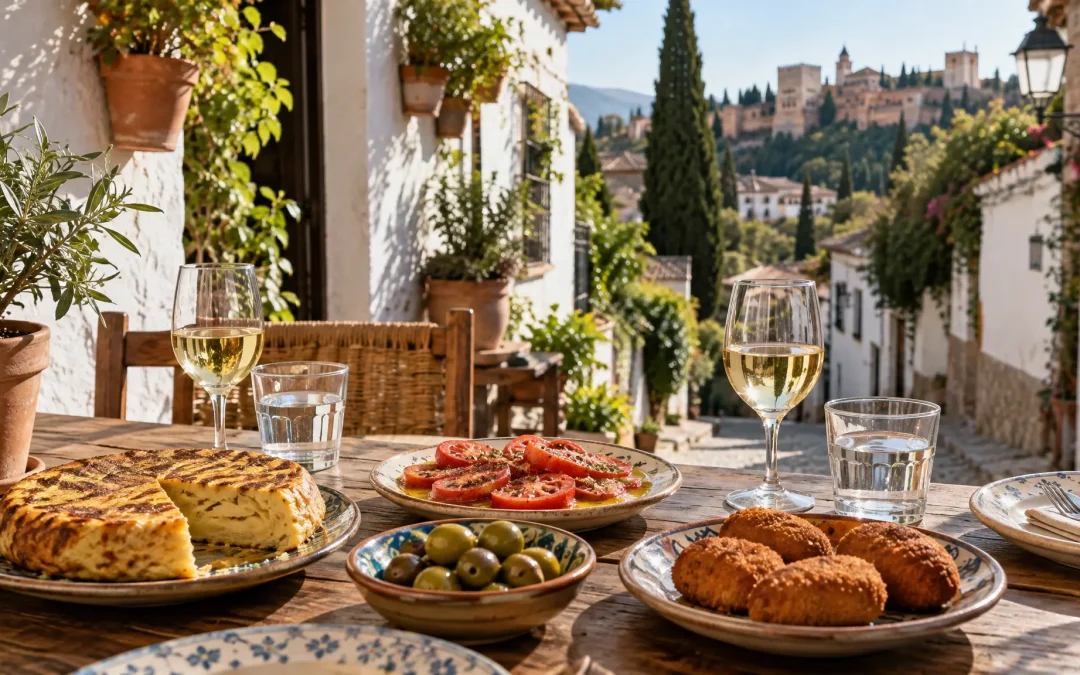
Its hillside setting offers opportunities for terraces and views toward the Alhambra. Some restaurants occupy traditional properties associated with the neighborhood’s garden-house heritage.
For a special dinner, ask whether your reservation includes a table with a view. A restaurant may advertise its outlook without offering the same perspective from every seat.
Also consider the walk. The Albaicín has slopes, steps, and uneven paving. Check access in advance if mobility or comfortable footwear is a concern.
A terrace dinner can be memorable, but the setting should complement the food rather than replace it as your main reason for booking.
Around Plaza Nueva: Practical Between Visits
Plaza Nueva is a useful meeting point between the center, the lower Albaicín, and routes toward the Alhambra.
Dining nearby can be convenient when your schedule includes several different parts of the city. However, it is worth comparing menus rather than choosing the first available table.
If you have just finished a walking tour, ask your guide which nearby options suit your preferences that day. Explain whether you want a quick bite, a quiet lunch, vegetarian choices, or a more elaborate meal.
Specific preferences lead to more useful recommendations than simply asking for “the best restaurant.”
What to Eat in Granada
A good dining itinerary balances familiar Spanish dishes with food connected to Granada and its surroundings.
Look for habas con jamón, a dish of broad beans with cured ham. If you are traveling in autumn, availability and preparation may vary, so ask whether it is on the current menu.
Remojón granadino combines orange with ingredients such as salted cod, olives, and onion, depending on the recipe. It offers a different flavor profile from the fried dishes often associated with tapas.
You may also encounter eggplant with a sweet drizzle, croquetas, Spanish tortilla, grilled vegetables, and dishes featuring local olive oil.
Seafood can provide a connection to the province’s Mediterranean coast, while cured meats and hearty preparations reflect inland traditions.
For dessert, look for piononos, small pastries associated with nearby Santa Fe. They are a good option when you want a sweet finish without ordering a large dessert.
Menus change, and not every traditional dish is available everywhere. Use these suggestions as conversation starters rather than a checklist you must complete.
Lunch and Dinner Times: Plan Around Local Habits
Dining hours in Granada may be later than you are used to.
Lunch commonly centers on the early to mid-afternoon, while dinner often begins later in the evening. Individual restaurants set their own kitchen hours, and some close between services.
If you prefer an early dinner, check availability before arriving. A bar may be open for drinks while its kitchen is still closed.
For a long sightseeing day, breakfast and a planned lunch stop can help you avoid becoming hungry when nearby kitchens are not serving.
If a restaurant advertises a menú del día, ask what it includes. Courses, drinks, and available choices differ between establishments.
Eating After Your Alhambra Visit
The most useful dining plan is one that fits your actual Alhambra itinerary.
Your Nasrid Palaces entry time, the order of your visit, and your final exit all affect when and where you can comfortably eat.
Avoid making a restaurant reservation immediately after a tightly scheduled monument visit. Allow time to finish, walk out, and reach your table without rushing.
Bring water and consider your meal beforehand, especially if your visit spans lunchtime. For an afterward reservation, choose between returning toward the center, exploring Realejo, or making dining a separate evening experience.
An Alhambra visit and dinner overlooking the monument can work beautifully together, but they do not need to happen back-to-back.
Dietary Requirements and Food Allergies
If you have dietary requirements, communicate them clearly before ordering.
Vegetarian-looking dishes may contain ham, meat stock, or fish. Complimentary tapas may be difficult to adapt, particularly during busy service.
For allergies or celiac disease, ask about ingredients, shared fryers, and cross-contact. Removing an ingredient from a finished plate is not the same as preparing a suitable meal safely.
A restaurant that can explain its preparation process is more useful than one that simply promises to “make something.”
For a special dinner, contact the restaurant before reserving so you can discuss your needs without pressure.
How to Choose a Restaurant Without Overplanning
You do not need a reservation for every meal. Leave room for spontaneous coffee stops, tapas, and places that catch your attention.
Reserve the meals that matter most: a terrace dinner, a celebration, or a restaurant you particularly want to try.
Before booking, check recent information about opening hours, the current menu, and reservation conditions. If you are relying on older recommendations, confirm that the establishment still offers the experience described.
A local guide can help connect your dining plans with your sightseeing route. This is particularly useful when you have limited time and want to avoid unnecessary walks across the city.
The aim is not to fit as many restaurants as possible into your trip. It is to enjoy a few well-chosen meals without feeling rushed.
Frequently Asked Questions
Where should I eat in Granada for my first visit?
Start with the historic center for convenience, Realejo for a neighborhood evening, or the Albaicín for a meal with atmosphere and possible Alhambra views. Choose according to your itinerary and dining preferences.
Are tapas free everywhere in Granada?
No. Many bars include a complimentary tapa with an eligible drink, but policies vary. Check before ordering, especially if you have dietary requirements.
Do I need restaurant reservations in Granada?
Reservations are advisable for special dinners, popular terraces, and specific restaurants. More casual meals can often remain flexible, although availability is never guaranteed.
Where can I eat after visiting the Alhambra?
The best choice depends on your exit and onward route. Realejo and the city center are options to consider. Allow enough time between finishing your visit and reaching a reserved table.
Can I find vegetarian food in Granada?
Yes, but check ingredients carefully. Vegetable dishes can contain ham, fish, or meat stock. A restaurant meal may offer more flexibility than complimentary tapas.
Is a restaurant with an Alhambra view worth booking?
It can be a memorable experience. Compare the menu, confirm the table location, and consider access before booking. Not every seat necessarily has the advertised view.
What should I try besides tapas?
Consider a shared restaurant meal featuring seasonal vegetables, regional dishes, seafood, or cured meats. A pionono offers a sweet connection to the province’s pastry tradition.