Downtown Granada Spain is compact, walkable, and full of contrasts: grand Renaissance architecture, lively plazas, traditional shops, and narrow streets that lead toward the Albaicín. The city center is an ideal place to get your bearings, enjoy a coffee, browse local stores, and experience everyday Granada between visits to the Alhambra and the historic hillside neighborhoods.
For many visitors, “downtown” means the area around the Cathedral, Plaza Bib-Rambla, and the main shopping streets. It is not a separate historic district with formal boundaries, but a convenient way to describe the central part of the city.
Where Is Downtown Granada?
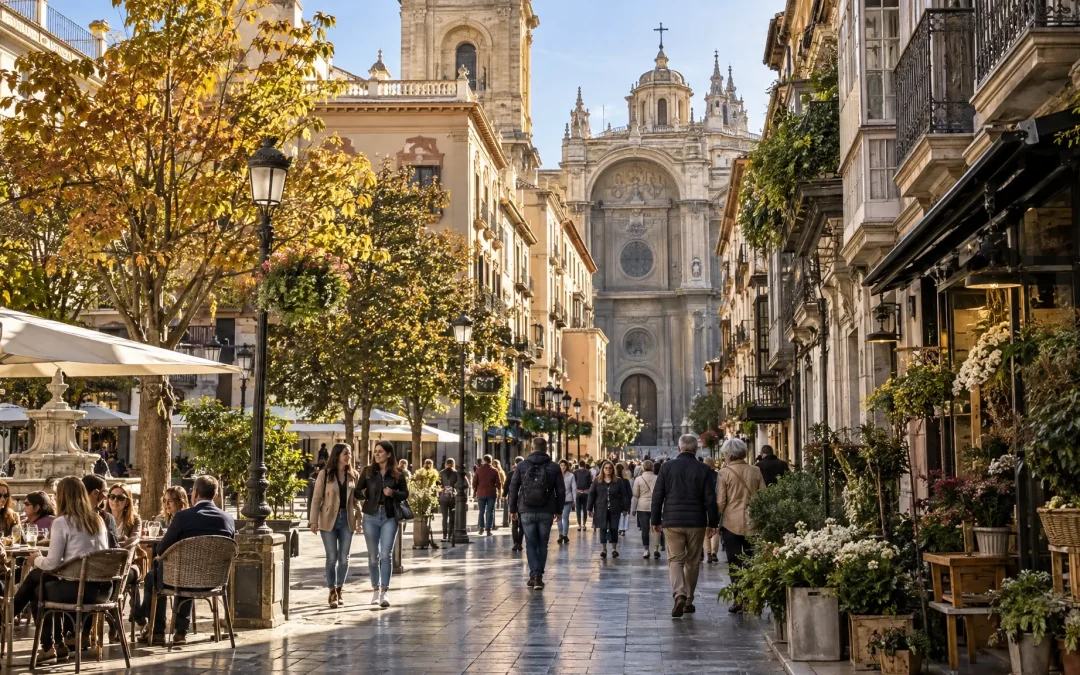
The center is easy to explore on foot. A useful starting point is the Cathedral and the Royal Chapel, close to Plaza Bib-Rambla and the Alcaicería. From there, you can continue toward Gran Vía de Colón, Puerta Real, and the streets around Calle Reyes Católicos.
Each area has its own feel. The Cathedral quarter is monumental and historic. Plaza Bib-Rambla is a lively square with cafés and flower stalls. The Alcaicería recalls Granada’s old silk market, while Gran Vía is a broad avenue lined with impressive buildings.
Downtown is also a practical base for exploring other parts of the city. The Albaicín rises to the northeast, while the Realejo lies to the southeast. The Alhambra sits above the city, reached by a steep uphill walk or local transport.
What to See in the City Center
Granada Cathedral
Granada Cathedral is one of the most important landmarks in the center. Its large white interior and impressive scale offer a striking contrast with the narrow streets around it.
The cathedral was built after the Christian conquest of Granada, on the site of the city’s former main mosque. Its architecture developed over several centuries, blending Renaissance design with later elements.
Visitors can admire the exterior from the surrounding streets or go inside during visiting hours. Check current opening times and ticket details before planning your visit, as access may vary around religious services and special events.
Royal Chapel of Granada
The Royal Chapel stands next to the Cathedral and is the burial place of the Catholic Monarchs, Ferdinand and Isabella, along with other members of their family.
The chapel is a meaningful stop for visitors interested in Spanish history. Its religious art, tombs, and historic objects connect Granada to the final years of the Christian conquest and the beginnings of Spain’s early modern period.
The Royal Chapel is a separate visit from the Cathedral, so check whether you need separate admission and confirm the current schedule.
Plaza Bib-Rambla
Plaza Bib-Rambla is one of the city center’s most inviting places to pause. The square is surrounded by cafés and restaurants, and its atmosphere changes throughout the day as locals meet, shop, and take a break.
It is a good place for a drink or a light meal, though the most central tables can be busy. Take a moment to look around the square before choosing where to sit. The nearby streets offer plenty of alternatives.
The Alcaicería
The Alcaicería is a small network of narrow lanes near the Cathedral. It was once Granada’s silk market, and today its shops sell souvenirs, crafts, and decorative goods.
The area is easy to walk through in a short visit. Look up at the architecture and enjoy the atmosphere, but remember that the modern shops are not a preserved medieval market. For a more complete understanding of Granada’s history, connect the visit with the nearby Cathedral and Royal Chapel.
Gran Vía and the Historic Center
Gran Vía de Colón is a broad central avenue with striking early twentieth-century buildings. It provides a different perspective from the smaller lanes around the Cathedral.
Walk along the avenue, then turn into the surrounding streets to find shops, cafés, and restaurants. The changing scale—from wide boulevard to intimate pedestrian lane—is part of what makes the center interesting.
The Best Way to Explore Downtown Granada
The center is best explored at a relaxed pace. You do not need a complicated route: begin around the Cathedral, visit the Royal Chapel if it interests you, stroll through the Alcaicería, and pause in Plaza Bib-Rambla.
From there, continue toward Puerta Real or walk along Gran Vía. Allow extra time for cafés, shops, and unplanned stops. The center is not only a checklist of monuments; it is also where you can observe daily life in Granada.
Wear comfortable shoes. The central streets are mostly easy to walk, but the paving can be uneven, and the route becomes steep as you head toward the Albaicín or the Alhambra.
Shopping and Local Finds
Downtown Granada has a mix of well-known stores and independent shops. The main shopping streets are concentrated around the Cathedral, Reyes Católicos, and the streets leading toward Puerta Real.
The Alcaicería is the most recognizable place for souvenir shopping, while side streets may offer a quieter browse. If you are looking for food gifts, local olive oil, sweets, or regional products, check the labels and ask about where items are made.
Shops may close for a break in the afternoon, especially smaller businesses. Opening hours can vary by season and day, so avoid leaving a must-buy item until the last minute.
Where to Eat in Downtown Granada
The center offers everything from quick coffee stops to traditional restaurants. Plaza Bib-Rambla and the surrounding streets are convenient, but it is worth walking a few minutes beyond the busiest corners to compare menus and atmosphere.
Granada is known for its tapas culture, though the way tapas are served and what is included can vary from one bar to another. If you want a particular dish or a full meal, ask what is available rather than assuming every tapa is complimentary or the same size.
For a more local-feeling meal, consider exploring streets away from the main tourist routes. You can also read our guide to where to eat in Granada Spain for ideas on choosing a restaurant.
How Downtown Connects to the Albaicín and the Alhambra
Downtown is a natural starting point for a wider Granada itinerary. From the Cathedral area, you can walk toward the Albaicín, but the streets become steep and winding as you climb. A route that looks short on a map may take longer than expected.
The Alhambra is uphill from the center. You can walk, take local transport, or use a taxi, depending on your schedule and mobility. If you have timed admission to the Nasrid Palaces, plan your journey with a generous margin and check the exact entrance shown on your ticket.
The Palace of Charles V sits within the Alhambra complex. Allow about fifteen minutes to see its facade and walk through the circular courtyard. Museums inside are separate and require additional time.
A Simple Half-Day Downtown Itinerary
Start with the Cathedral and Royal Chapel, allowing time for whichever interiors you want to visit. Continue through the Alcaicería and take a break in Plaza Bib-Rambla.
Afterward, walk along Gran Vía or browse the nearby shopping streets. If you still have energy, continue toward the Albaicín for a change of scenery, keeping in mind that the route uphill takes effort.
This plan gives you a taste of the center without trying to fit every museum and neighborhood into one morning. If you have a full day, pair downtown with a separate visit to the Alhambra rather than rushing both.
Frequently Asked Questions
What is considered downtown Granada?
Downtown usually refers to the central area around the Cathedral, Royal Chapel, Plaza Bib-Rambla, the Alcaicería, and nearby shopping streets such as Gran Vía and Reyes Católicos.
Is downtown Granada walkable?
Yes. The center is compact and easy to explore on foot. Routes become steep when you continue toward the Albaicín or the Alhambra.
How much time should I spend in downtown Granada?
A few hours is enough for a walk through the main streets and squares. Allow more time if you plan to visit the Cathedral and Royal Chapel interiors or stop for a meal.
Is the Alhambra in downtown Granada?
No. The Alhambra is on a hill above the city center. You can reach it on foot or by transport, but allow extra time for the journey and follow the entrance details on your ticket.
Is downtown Granada a good place to stay?
It can be a convenient base for restaurants, shops, and city transport. Consider how close your accommodation is to the places you plan to visit, and remember that Granada has hills even when a location looks central on a map.
Where can I shop in downtown Granada?
The streets around the Cathedral and Reyes Católicos have a range of shops. The Alcaicería is a popular stop for souvenirs and crafts.
Can I walk from downtown Granada to the Albaicín?
Yes. The Albaicín is reachable on foot, but the route climbs and includes narrow, sometimes uneven streets. Wear comfortable shoes and allow time for the uphill walk.