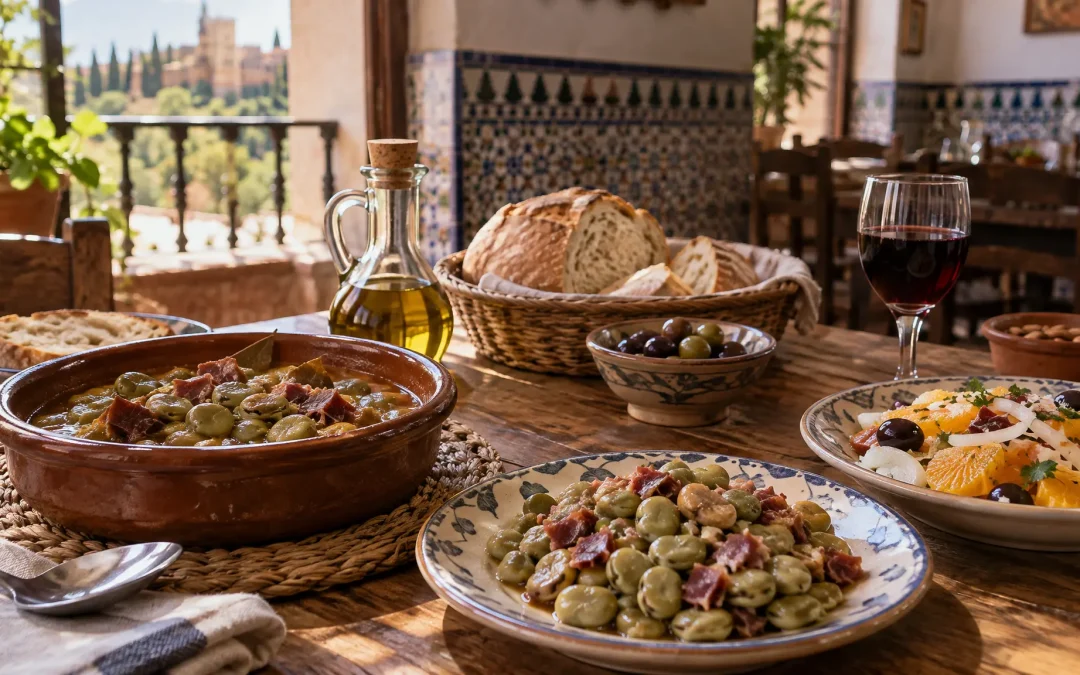
Traditional food in Granada Spain brings together Andalusian ingredients, mountain cooking, and a tapas culture that gives every meal a social side. From broad beans with cured ham to chilled orange salad and hearty stews, Granada’s local dishes reflect the seasons and the landscapes around the city.
Food is one of the easiest ways to get to know Granada beyond its monuments. You can try regional recipes in traditional restaurants, order tapas with a drink, and browse local markets for olive oil, cured meats, sweets, and other products from the province.
What Makes Granada’s Food Distinctive?
Granada’s cooking draws on several influences. The city sits between the Mediterranean coast, the Sierra Nevada, and the fertile countryside of the Vega. That means local menus can combine mountain-preserved meats, garden vegetables, olive oil, fruit, and seafood brought inland from the coast.
You will also notice that food is often tied to the season. Hearty stews and beans are especially appealing in cooler months, while salads and lighter dishes suit warmer days. Many restaurants serve familiar Andalusian favorites alongside recipes associated more specifically with Granada and its province.
There is no single menu that represents every household or restaurant. Recipes vary, and some dishes appear more often at certain times of year. Ask what is seasonal or typical that day; staff can often point you toward a local favorite.
Granada’s Tapas Tradition
Granada is well known for its tapas culture. In many bars, ordering a drink comes with a small tapa, though the custom and the portions vary. Some places let you choose from a list, while others bring a tapa selected by the kitchen.
The best approach is to treat tapas as an invitation to discover local food rather than assume every bar follows exactly the same rule. Ask what comes with your drink and whether you can choose. If you want a larger meal, order additional dishes from the menu.
A relaxed tapas route is a good way to taste several things without committing to a single large plate. Try one bar for a drink and tapa, then continue to another neighborhood or return later for dinner. Avoid ordering more than you can comfortably eat at the first stop—portions can be generous, and the next tapa may arrive before you expect.
Traditional Dishes to Look For
Habas con Jamón
Habas con jamón combines broad beans with cured ham, often cooked simply with olive oil and seasoning. It is one of the dishes most closely associated with Granada.
The appeal is in the ingredients rather than elaborate preparation: tender beans, savory ham, and good olive oil. It is particularly satisfying in spring, when broad beans are in season, though you may see versions on menus at other times of year.
Remojón Granadino
Remojón granadino is a refreshing salad made with orange, olives, onion, and other ingredients that can vary by recipe. Some versions include cod, while others keep the dish simpler.
The sweet citrus and salty olives make a distinctive combination. It is a good option when you want something lighter, and it offers a taste of the region’s connection to both inland produce and the Mediterranean.
Olla de San Antón
Olla de San Antón is a substantial winter stew traditionally associated with the feast of Saint Anthony in January. Recipes vary, but the dish is generally made with beans, vegetables, and preserved pork products.
It is not a light lunch. If you encounter it on a seasonal menu, ask about the ingredients and portion size before ordering. A bowl can be filling enough to make it the main event of the meal.
Plato Alpujarreño
The Plato Alpujarreño comes from the Alpujarra region in the mountains southeast of Granada. It commonly includes potatoes, eggs, cured meats, and other hearty ingredients, though the exact combination varies.
This is mountain food designed to satisfy after a day outdoors. It is a good dish to try in the Alpujarras themselves, where local restaurants often present their own versions.
Sacromonte-Style Dishes
Some menus feature dishes associated with Sacromonte, Granada’s hillside neighborhood known for its cave houses and flamenco traditions. Recipes may use ingredients that are less familiar to visitors, and preparations differ between restaurants.
If a dish is new to you, ask the server what it contains and how it is prepared. That makes it easier to decide whether it suits your tastes and dietary needs.
Andalusian Gazpacho
Gazpacho is a chilled tomato-based soup served across Andalusia. It is refreshing in warm weather and is widely available in Granada during the hotter months.
Although it is not unique to Granada, it belongs on a summer food list. You may also see salmorejo, a thicker tomato and bread preparation that is often served with toppings.
Sweets and Local Products
Granada’s sweet traditions reflect its long history and the influence of convent baking. Look for pastries and cakes in bakeries and specialist shops, and ask which items are made locally.
The province is also known for olive oil, fruit, cheeses, and cured meats. If you plan to bring food home, check current customs and airline rules for your destination, especially for meat and dairy products.
Where to Try Traditional Food in Granada
You can find traditional dishes in restaurants throughout the city, from the center to the Realejo and the Albaicín. The busiest streets near major sights are convenient, but walking a few blocks away often gives you more options and a calmer setting.
For tapas, choose a bar that feels comfortable, check the menu, and ask what is included with a drink. For a sit-down meal, look for dishes named on the menu rather than relying only on a restaurant’s general claim to serve “traditional” food.
Markets and food shops are also useful stops. They give you a closer look at local ingredients and make it easier to find edible souvenirs. If a particular dish matters to you, check whether it is seasonal before planning your meal around it.
For more neighborhood and restaurant ideas, see our guide to where to eat in Granada Spain.
How to Order and Eat Like a Local
Lunch is traditionally the main meal of the day, and dinner often starts later than many visitors expect. If you arrive at a restaurant early, the kitchen may not yet be serving its full menu.
In tapas bars, start with a drink and see what arrives. If you have dietary restrictions, explain them clearly and ask about ingredients; recipes and serving customs vary from one place to another.
Sharing is common when ordering several dishes. Ask whether a portion is designed for one person or for the table, especially when ordering a hearty stew or a large mountain-style plate.
Frequently Asked Questions
What food is Granada famous for?
Granada is known for its tapas culture and dishes such as habas con jamón, remojón granadino, and the winter stew olla de San Antón. Menus also feature broader Andalusian favorites.
Are tapas free in Granada?
In many bars, a small tapa is served with a drink, but practices vary. Ask what is included when you order, and check the menu if you want additional dishes.
What is habas con jamón?
It is a dish of broad beans cooked with cured ham, usually with olive oil and simple seasoning. It is especially associated with Granada and is often best known as a spring dish.
What is remojón granadino?
It is a local salad that commonly combines orange, olives, and onion. Some recipes include cod, and ingredients vary from one version to another.
What should I eat in Granada in winter?
Look for hearty dishes such as olla de San Antón, a traditional stew associated with January. Seasonal menus may also include other bean and meat dishes.
Is Plato Alpujarreño a dish from Granada?
It is associated with the Alpujarra region in Granada province. The dish is filling and usually includes potatoes, eggs, and cured meats, though recipes vary.
Where can I find traditional food in Granada?
Traditional dishes appear in restaurants and tapas bars across the city. Try the center, Realejo, or Albaicín, and ask about seasonal specialties and what comes with a drink.