A Sacromonte and Albaicin guided tour is one of the best ways to understand the real soul of Granada beyond the Alhambra. The monument is extraordinary, of course, but the city becomes much more meaningful when you walk through the hillside neighborhoods that have shaped its daily life, music, architecture, and identity for centuries.
The Albaicín and Sacromonte are not places to rush through with a map in your hand. Their beauty is found in the details: a narrow street that suddenly opens onto a view of the Alhambra, the sound of a guitar coming from a cave house, the scent of jasmine in a quiet courtyard, or a small local bar where neighbors still meet at the end of the day.
On a Sacromonte and Albaicin guided tour, you do not simply see two of Granada’s most famous neighborhoods. You learn how they are connected to the city’s Islamic past, Roma heritage, Christian history, and long tradition of welcoming people from different cultures. This is the Granada that many visitors remember most vividly when they return home.
The Albaicín: Granada’s Historic Moorish Quarter
The Albaicín is Granada’s oldest and most atmospheric neighborhood. It sits on the hill opposite the Alhambra, and its maze of steep lanes, whitewashed houses, hidden plazas, and traditional water channels still reflects the city’s Islamic past.
During the Nasrid period, the Albaicín was a thriving urban district filled with workshops, mosques, markets, bathhouses, and family homes. After the Christian conquest of Granada in 1492, many buildings changed function, but the neighborhood kept its original layout. That is why walking through the Albaicín feels so different from walking through the modern center of Granada.
A Sacromonte and Albaicin guided tour helps you understand what you are looking at while you explore. A simple doorway may hide a traditional carmen, a Granada house with a garden and views. A small square may once have been the center of a medieval neighborhood. A church may stand where a mosque once stood. Without the stories behind these places, it is easy to miss what makes the Albaicín so special.
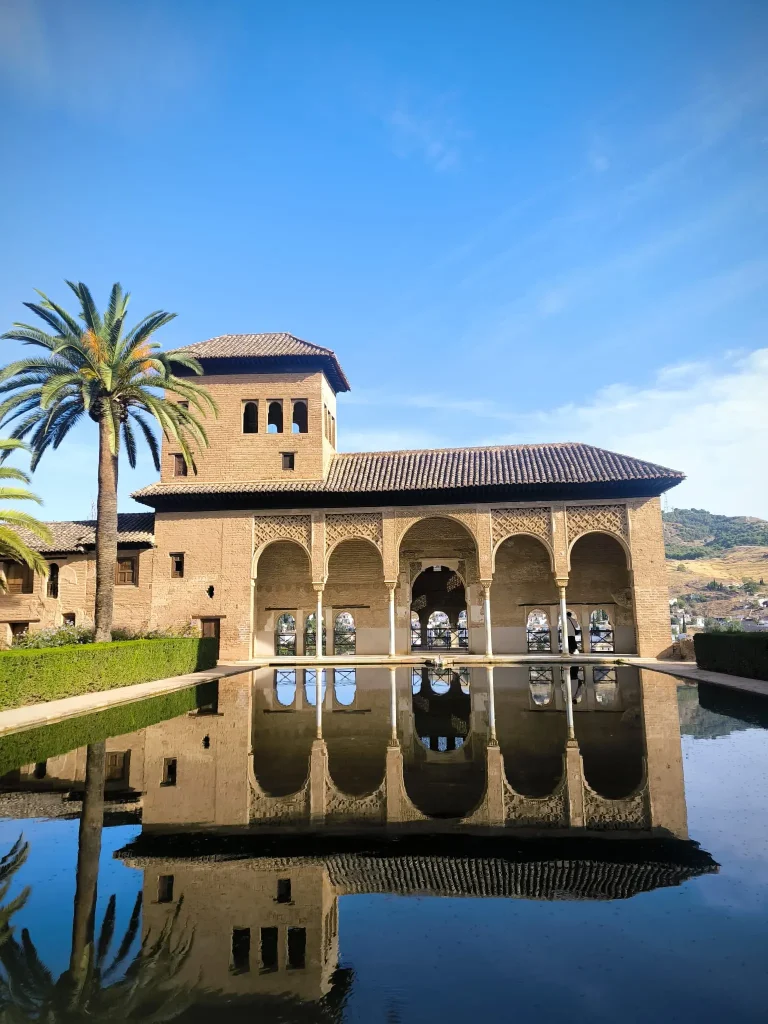
The neighborhood is also a UNESCO World Heritage Site as part of the Alhambra, Generalife, and Albaicín ensemble. Its importance is not only architectural. The Albaicín represents the living memory of Granada: a place where history is not enclosed behind museum doors but remains present in the streets, houses, gardens, and daily rhythm of the neighborhood.
Why the Albaicín Is Best Explored with a Local Guide
The Albaicín is beautiful, but it can also be confusing for first-time visitors. The streets are narrow, many are steep, and it is surprisingly easy to lose your sense of direction. This is part of its charm, but it can make a self-guided visit feel more stressful than relaxing.
A Sacromonte and Albaicin guided tour allows you to enjoy the neighborhood at a comfortable pace without worrying about routes, hills, or missing the places that really matter. A local guide can choose a route adapted to your interests and walking pace, combining major landmarks with quieter corners that most visitors would not find on their own.
The experience is especially valuable for travelers who want more than a quick walk to a viewpoint. The Albaicín is full of layers: Islamic urban planning, Renaissance churches, traditional homes, local markets, and stories of the families who have lived here for generations. These are the details that turn a beautiful walk into a meaningful experience.
Sacromonte: Cave Houses, Flamenco, and Roma Heritage
From the Albaicín, the route naturally continues toward Sacromonte, one of the most distinctive neighborhoods in Spain. Sacromonte is known for its cave houses, which are built into the hillside overlooking the Alhambra and the Darro Valley.
For centuries, these caves have been home to different communities, including Roma families, artists, craftspeople, and laborers. Over time, Sacromonte developed a unique cultural identity deeply connected to flamenco. The music and dance performed here are not simply entertainment for visitors; they are part of the neighborhood’s heritage and a powerful expression of its history.
A Sacromonte and Albaicin guided tour gives you the context needed to appreciate this heritage respectfully. You will learn why cave living developed in this part of Granada, how the neighborhood changed over time, and why Sacromonte remains so important to flamenco culture today.
The famous zambra is one of Sacromonte’s best-known traditions. It is a form of flamenco performance with roots in the celebrations of Granada’s Roma community. Historically, zambras were linked to weddings and family gatherings. Today, visitors can experience flamenco in Sacromonte, but the most rewarding visits are those that explain the cultural background rather than treating the neighborhood as a simple attraction.
A Different View of the Alhambra
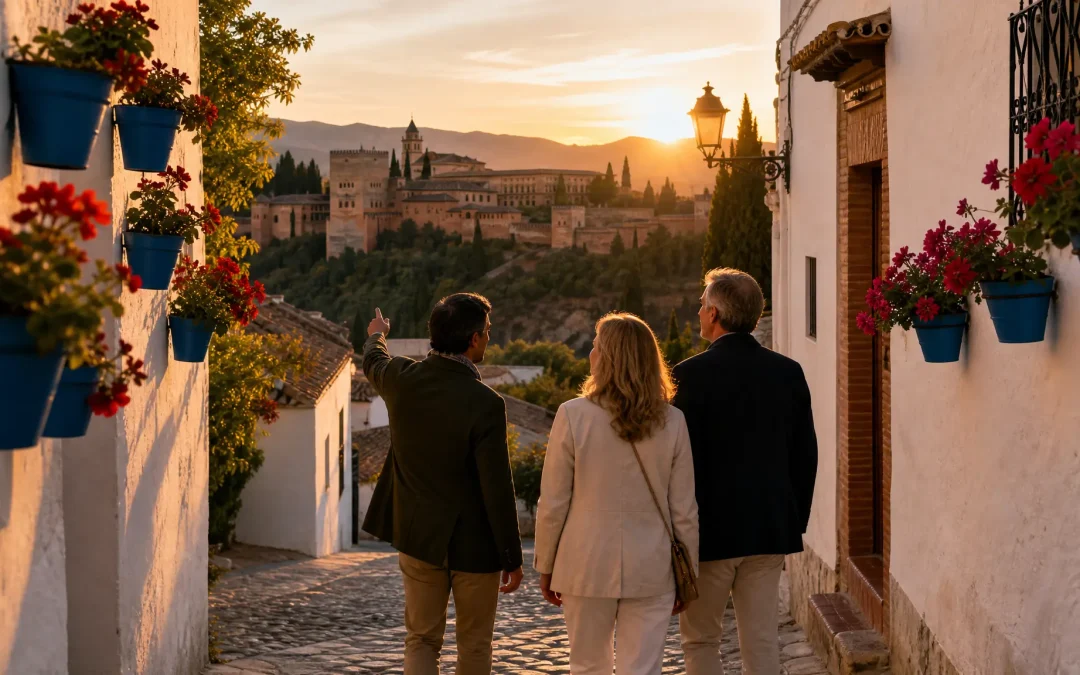
One of the great pleasures of a Sacromonte and Albaicin guided tour is seeing the Alhambra from the outside. Most visitors know the monument from within its walls, but the view from the opposite hill reveals something equally important: its relationship with the city, the mountains, and the surrounding landscape.
From the Albaicín and Sacromonte, the Alhambra appears above the trees on the Sabika hill, with the Sierra Nevada often visible behind it. This perspective helps you understand why the Nasrid rulers chose this location. The fortress-palace was not isolated from Granada; it was designed to dominate the landscape while remaining connected to the city below.
There are several viewpoints in these neighborhoods, but the most famous is the Mirador de San Nicolás. It offers a remarkable panorama of the Alhambra and Sierra Nevada. However, Granada is full of smaller terraces, lanes, and quiet corners where the view can be just as memorable. A local guide can help you experience the area beyond the busiest spots and explain what you are seeing across the valley.
The Meaning of a Carmen in Granada
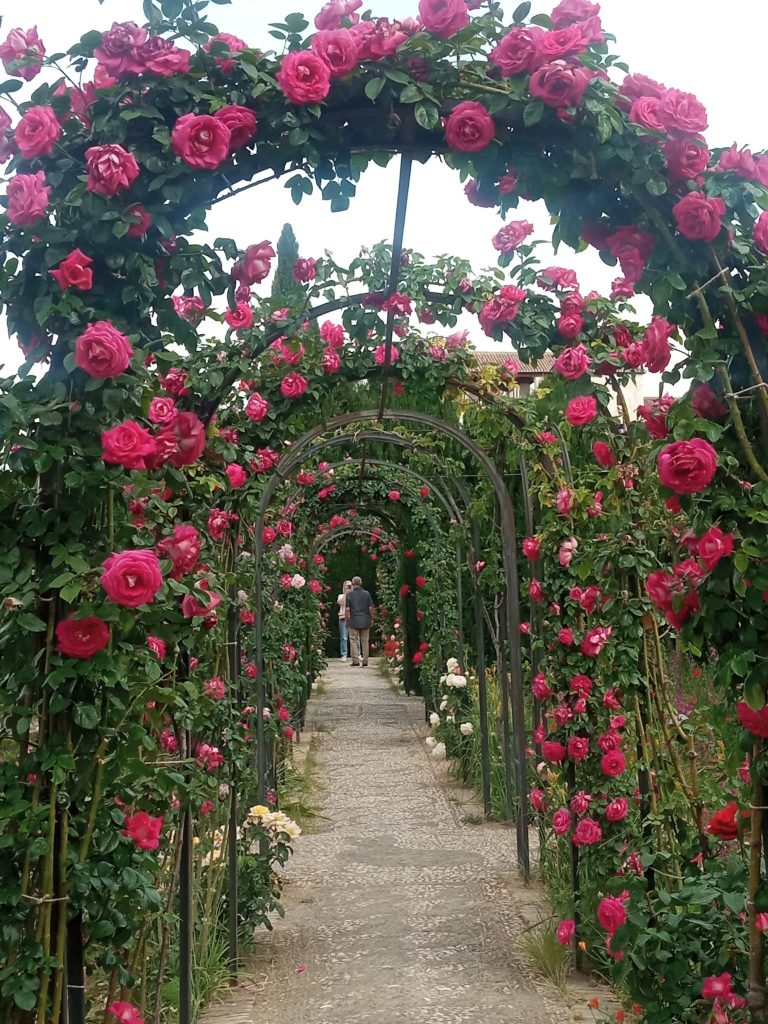
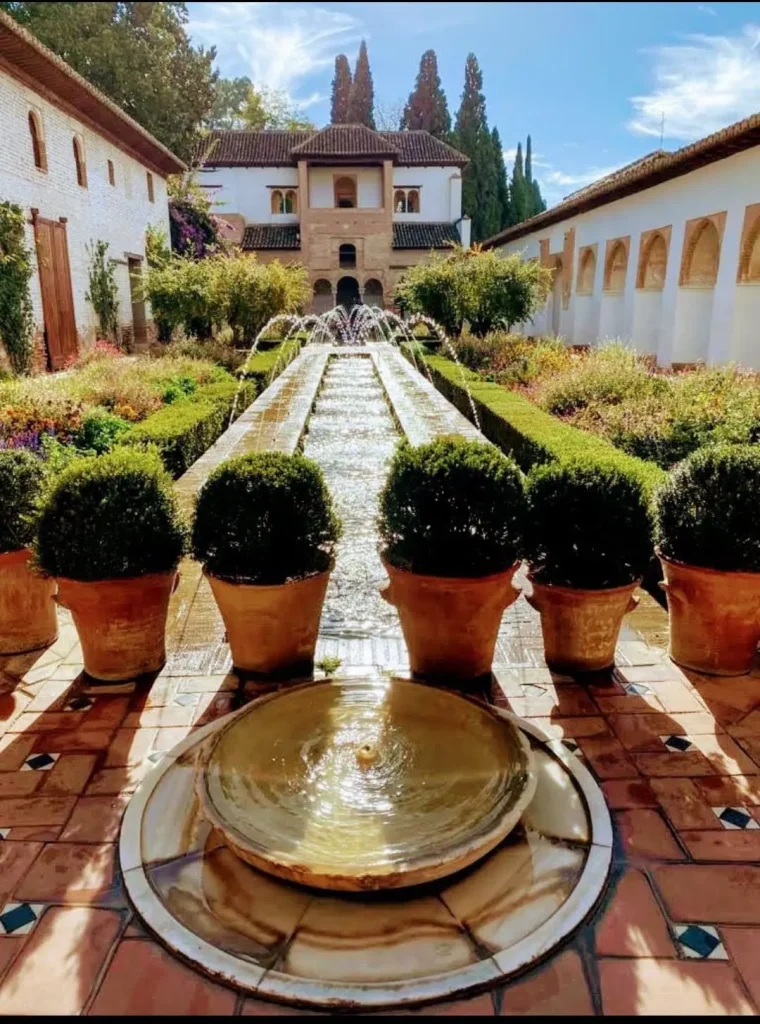
One of the most distinctive features of the Albaicín is the traditional carmen. In Granada, a carmen is a house with an enclosed garden or orchard, usually protected from the street by high walls. Inside, there may be fruit trees, flowers, fountains, terraces, and views of the Alhambra.
The word is linked to the Arabic concept of a garden or vineyard, and these homes reflect the importance of privacy, water, shade, and nature in Granada’s architecture. From the street, many carmenes look simple or even hidden. Their beauty is often found inside, away from the noise of the city.
Understanding the role of the carmen is one of the reasons why a Sacromonte and Albaicin guided tour is so rewarding. It reveals how Granada’s history is not only visible in major monuments, but also in the way people have designed their homes and gardens for centuries.
A More Personal Way to Experience Granada
Granada is a city of contrasts. You can move from the grand halls of the Alhambra to a quiet village-like lane in the Albaicín within a short walk. You can hear church bells, the call of birds in a garden, and a flamenco guitar from a nearby cave. These experiences are what give the city its character.
A Sacromonte and Albaicin guided tour is ideal for travelers who want a deeper connection with Granada. It is not about checking off landmarks. It is about walking slowly, asking questions, discovering stories, and understanding why these neighborhoods continue to matter to the people who live here.
Whether you are visiting Granada for the first time or returning to see the city from a different perspective, the Albaicín and Sacromonte offer an experience that stays with you long after your trip ends.
Frequently Asked Questions About Sacromonte and the Albaicín
How long does a Sacromonte and Albaicin guided tour take?
A good Sacromonte and Albaicin guided tour usually takes around two to three hours. This gives you enough time to walk through both neighborhoods at a relaxed pace, enjoy the main viewpoints, and learn about the history and culture of the area.
Is the Albaicín difficult to walk around?
The Albaicín has steep streets, cobblestones, and some stairs, so comfortable walking shoes are essential. The route can be adapted depending on your mobility and preferences, but visitors should expect some uphill walking.
Can I visit Sacromonte during the day?
Yes. Sacromonte is beautiful during the day, especially for its views, cave-house history, and peaceful atmosphere. In the evening, the neighborhood becomes especially popular for flamenco performances and sunset views of the Alhambra.
Is Sacromonte safe to visit?
Sacromonte and the Albaicín are generally safe for visitors, especially when explored with normal awareness. As in any popular destination, it is sensible to keep personal belongings secure and avoid poorly lit or isolated areas late at night.
What is the difference between the Albaicín and Sacromonte?
The Albaicín is Granada’s historic Moorish quarter, known for its medieval street layout, white houses, gardens, and Islamic heritage. Sacromonte is the neighboring hillside district known for its cave houses, Roma heritage, and flamenco traditions. Together, they offer one of the most authentic experiences in Granada.
Is a Sacromonte and Albaicin guided tour worth it?
Yes, especially if you want to understand the history and culture behind the streets, viewpoints, cave houses, and architecture. A guided visit helps you avoid getting lost, discover meaningful details, and experience these neighborhoods as living parts of Granada rather than just scenic places to photograph.