Bar food in Spain is one of those things you don’t fully understand until you live it. You can read menus, watch videos, and even order tapas abroad—but the real experience is the social rhythm: standing at the bar, a small bite arriving with your drink, a quick conversation, a laugh, and then moving on to the next place. As a Spaniard, every time I go abroad I miss that mix of flavors and spontaneity. I love trying other cuisines, of course, but it’s never quite the same as the well-established, unpretentious tradition of Spanish tapeo.
So what exactly are tapas, how do you “do” tapas properly, and what should you expect when you walk into a busy Spanish bar?
What are tapas?
Tapas are small amounts of food served in bars to accompany a drink. The word itself is often used like a synonym for aperitif, but its origin is uncertain. One popular story involves King Alfonso XIII during a visit to Cádiz. He stopped at a beach bar that still exists, Ventorrillo del Chato, and asked for a glass of sherry. A gust of wind threatened to blow sand into the glass, so a quick-thinking waiter covered it with a slice of ham. The king asked what it was, the waiter explained he had placed a “lid” (tapa) on it, and Alfonso XIII supposedly asked for another sherry “with another tapa.” People around him copied the idea, and the habit spread.
Whether or not that story is the true origin, it captures the spirit: tapas are casual, practical, and meant to be enjoyed alongside a drink.
Types of tapas (and what tapas are not)
Traditional Spanish cooking is famously simple: clean flavors, great ingredients, and minimal fuss. True tapas tend to reflect that. Think cold meats, cheeses, olives, pickles—foods that don’t require complicated preparation. That doesn’t mean tapas can’t be creative (they can), but the “fancy restaurant interpretation” of tapas that some visitors expect isn’t the whole picture.
In Spain, going for tapas—tapear—often means:
- Standing at the bar (or sometimes sitting outside on a terrace)
- Ordering a drink (wine, beer, vermouth…)
- Eating a small bite that comes with it (free or paid, depending on the city and bar)
Some cities have many tapas bars close together, and the classic plan is to bar hop. You’ll often notice a pattern: the tables are saved for full meals, while the bar area is where tapas life happens. If everyone is packed at the bar and the tables are empty, take the hint and do what locals do.
Now, here’s a big point that confuses visitors:
Large portions ordered to share are usually not tapas. They’re called raciones. A ración is like a large tapa, and it’s actually one of the most common ways of eating in Spain—especially in groups. To make a full meal, you’ll order several raciones (meat, vegetables, something fried, maybe a salad), and share everything.
If you’re traveling solo, raciones can be tricky because portions are big and the price makes more sense when shared. Sometimes you can order a media ración (half portion), depending on the place.
What tapas might you see?
The variety is astonishing. Some common “Spanish cupboard-fillers” show up everywhere:
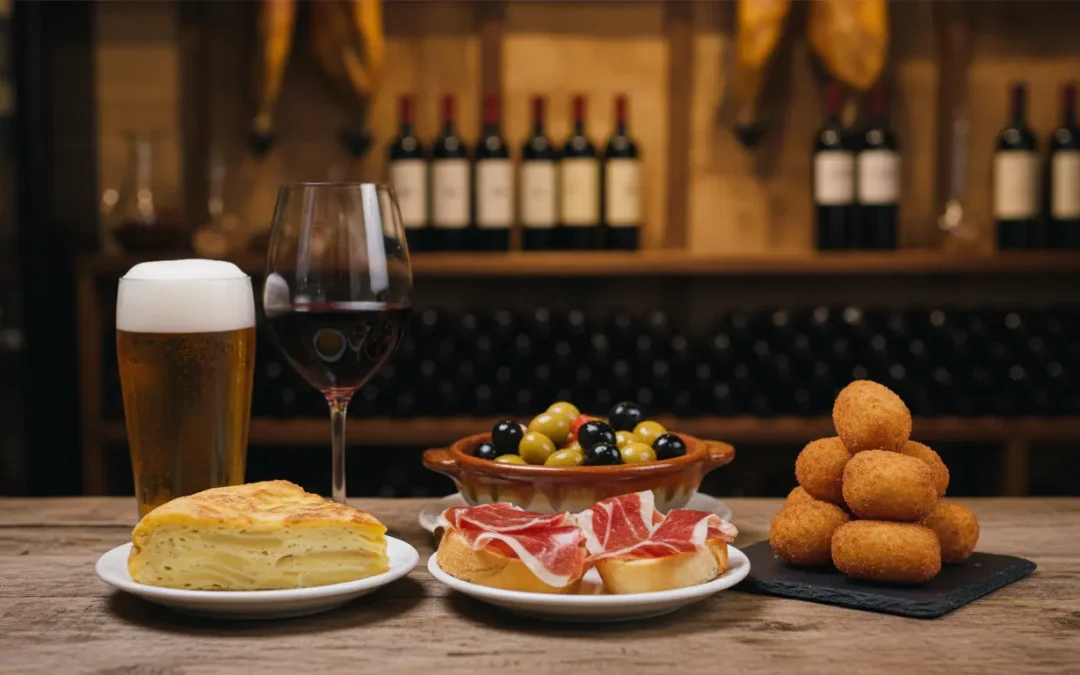
- Olives
- Tortilla de patatas (hot or cold)
- Sardines and other small fish
- Roast vegetables
- Croquetas
- Cold meats and cheeses on slices of bread
And honestly: anything can become a tapa. Paella, croquettes, ham and cheese on toast—if it’s small and served with your drink (either free or paid), it fits the tapas spirit.
Are tapas free?
Sometimes. Not always.
In many parts of Spain, the days of free tapas are largely over. A simple rule of thumb: if a tapa arrives without you asking for it, it’s usually free. If you choose it from a list, you’ll probably pay.
Tips for going for tapas (like a local)
A tapas night looks effortless, but a few small habits make it smoother:
- Don’t over-settle if you want to bar hop
Tapeo is often done standing at the bar. Sitting on a terrace is perfect for a relaxed afternoon, but if your plan is to move, don’t get too comfortable too early. - Go at the right times
Late morning to pre-lunch is classic. Late afternoon to dinner is another peak time. - Don’t eat everything in one bar
A great rule is no more than two tapas in the same place—then move on and discover more. - If you’re in a group, take turns paying
One person pays a round, then another, and so on. It keeps things easy and social. Another method is the traditional bote (everyone contributes and you pay from the pot). - Vary what you order
Don’t repeat the same tapa in every bar. Mix it up so you can try more flavors—and later, you’ll be able to recommend places with confidence. - Keep the vibe friendly
Tapeo is about enjoying time together. Avoid controversial topics if they lead to arguments. Stories, memories, and jokes fit the mood better.
And if you’re new to a city, it’s normal to feel hesitant about leaving a bar you love—what if the next one isn’t as good? That’s exactly why a guided tapas experience can be a smart choice. You can take a local-led tapas tour and let someone who knows the city guide you through several bars, with a dish and drink in each.
You’ll be thankful for it when you’re trying to avoid ordering the snails.