Breakfast in Andalusia is one of the easiest (and tastiest) ways to understand daily life in southern Spain. Visitors often arrive expecting churros every morning, but that’s not really how it works here. In Andalusia—especially in cities like Granada—breakfast is usually simple, savory, and built around excellent bread, olive oil, and coffee.
If you’ve ever wondered what a “typical Spanish breakfast” is, you’re not alone. It’s actually hard to define, because Spain is made up of many regions with different habits. But if you step into a Spanish bar in the morning, you’ll quickly see patterns: people drinking coffee with a tostada, pan con tomate (tomato bread), tortilla de papas (potato omelette), or a bocadillo (sandwich).
And here’s a little confession: one of the things I love most in life is going out to eat. Breakfast is no exception. In Spain we don’t only go out for tapas—we also love going to the bar for breakfast.
What time do Andalusians eat breakfast?
After around 9am, bars start filling up with locals ordering their morning routine: coffee with milk and something to eat. It’s quick, social, and comforting—especially if you’re starting a long day of walking, sightseeing, or working.
And about those churros: in southern Spain, churros are not the most typical everyday breakfast. They’re more of an occasional treat for a special morning (and yes—worth it when you do have them). But on a normal weekday, most locals are reaching for something else.
The most traditional breakfast meal in Andalusia: the tostada
So what is the most traditional breakfast in Andalusia?
A tostada—a piece of toasted bread.
In most bars, a tostada is served in a few classic styles, but the most common options are:
- Butter and jam
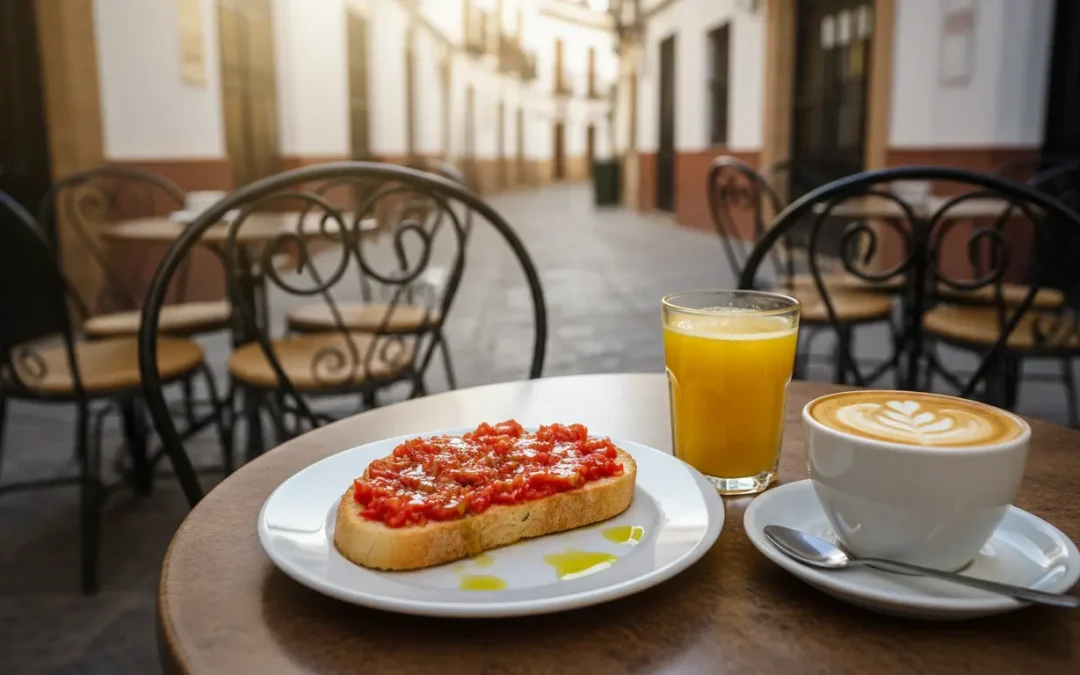
- Olive oil and tomato
If you ask me, the best possible version (something I could honestly eat every day) is the perfect balance of flavors and texture: toasted bread—ideally a flat bread called a mollete—plus extra virgin olive oil, crushed tomato, and Iberian ham.
Simple ingredients, done well, are the secret of Andalusian breakfast.
A very local detail: garlic olive oil
Years ago it was very common to find a bottle of olive oil with garlic inside sitting on the bar. In my husband’s family, they would scrape a clove of garlic on the bread first, then add tomato, extra virgin olive oil, and salt.
It’s delicious and healthy… but let’s just say it’s not recommended if you have a date or important meetings right after. It could knock a bear down.
How to ask for coffee in Spain (the Spanish way)
Ordering coffee in Spain is its own little language. Here are the basics you’ll hear in Andalusia:
- “Café con leche” = coffee with milk
- “Café solo” = black coffee (short)
- “Café Espresso” = espresso
- “Cortado” = espresso with a little milk
- “Café Doble Espresso” = double espresso
- “Café Descafeinado” = decaf
Once you know these, you’ll feel instantly more confident walking into any bar.
How to order a full Andalusian breakfast (example)
If you want the classic combo—coffee with milk, fresh orange juice, and a ham tostada—here’s exactly how you can order:
English: “Hi, can I please have a coffee with milk, an orange juice and a ham tostada. Thanks.”
Spanish: “Hola, un café con leche, un zumo de naranja y una tostada de jamon iberico, por favor. Gracias.”
Locals really appreciate it when visitors try—even a simple order in Spanish can change the whole vibe of the interaction.
One “hidden” surprise: toast size
Here’s something many visitors don’t expect: in many bars, one toast can mean two pieces of bread, sometimes almost as big as a baguette.
That’s why I often order half a toast (media tostada): one piece is enough for a normal breakfast, and I can keep my energy without feeling heavy.
But if I’m very hungry—or I know I have a long day ahead—I’ll order a full toast (tostada entera) and enjoy it without guilt. It’s simple, filling, and genuinely delicious.
Try it in Granada (and start your trip the best way)
If you’re visiting Granada, breakfast is a perfect first food experience—low pressure, very local, and easy to repeat in different neighborhoods. You can taste these foods (and learn the little cultural details that make them special) by joining one of the experiences at Tours, or browse more ideas in the Travel Blog.
And if you want to ask questions or plan something custom, you can reach out via Contact.
So—what other Spanish breakfast foods have you tried so far?